European Conference on Computational Biology | ECCB 2026
European Conference on Computational Biology (ECCB) 2026 is Europe's premier biennial conference for computational biology, bioinformatics, and data-driven life sciences. Taking place in Geneva, Switzerland, from 31 August to 4 September 2026, the conference will bring together over 1,000 researchers, developers, biocurators, and clinicians to discuss advances in genomics, transcriptomics, structural bioinformatics, systems biology, medicine, and environmental bioinformatics. Organized by the SIB Swiss Institute of Bioinformatics, ECCB 2026 provides a platform for presenting research, fostering collaborations, and exploring innovative computational approaches to biological and environmental challenges.

|
Event Details
-
Date : 31 August to 4 September 2026
-
Location: Geneva, Switzerland
Speakers
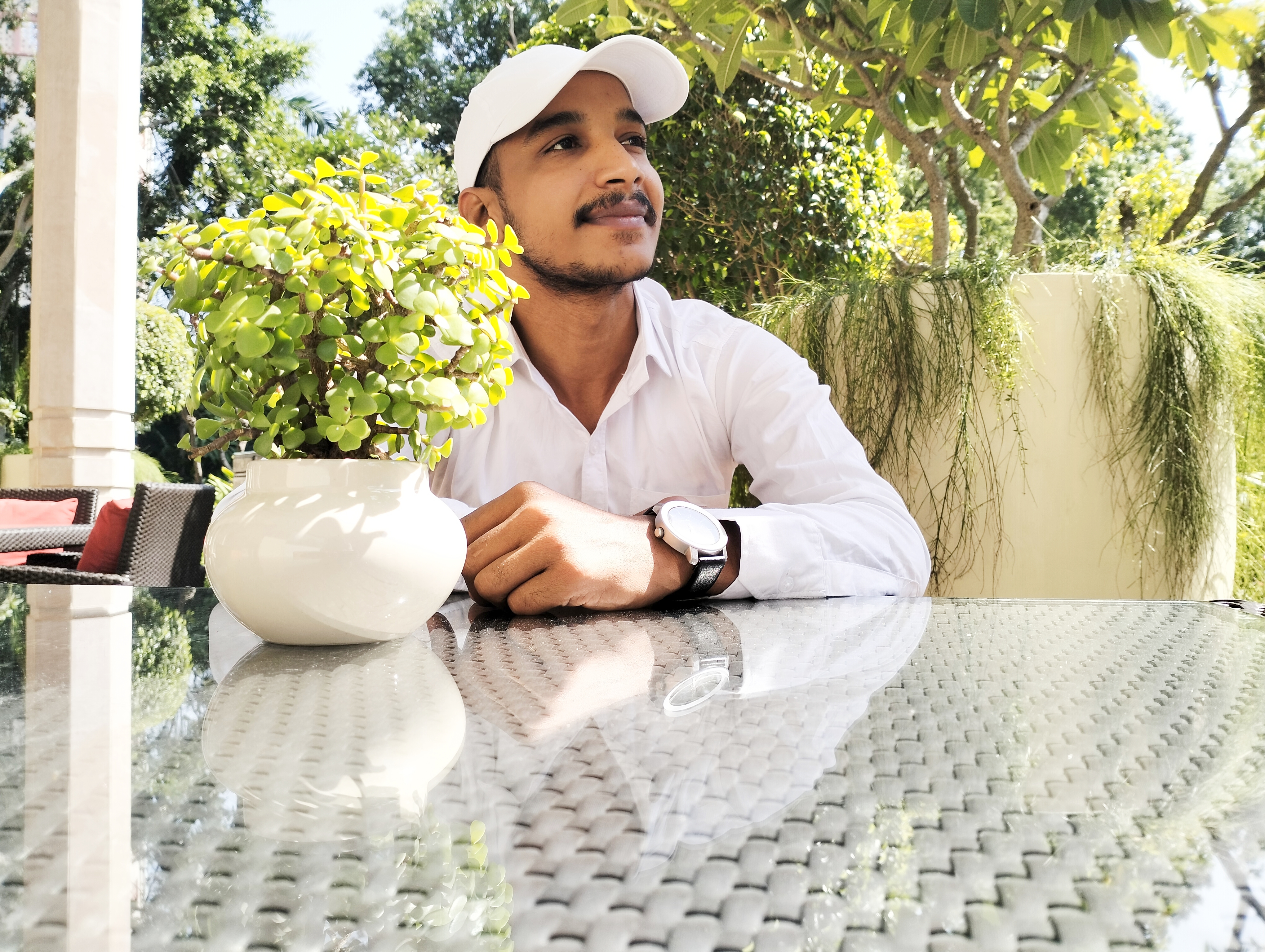
Mr. Mandeep Umra
BRIC-National Institute of Plant Genome Research (BRIC-NIPGR), India
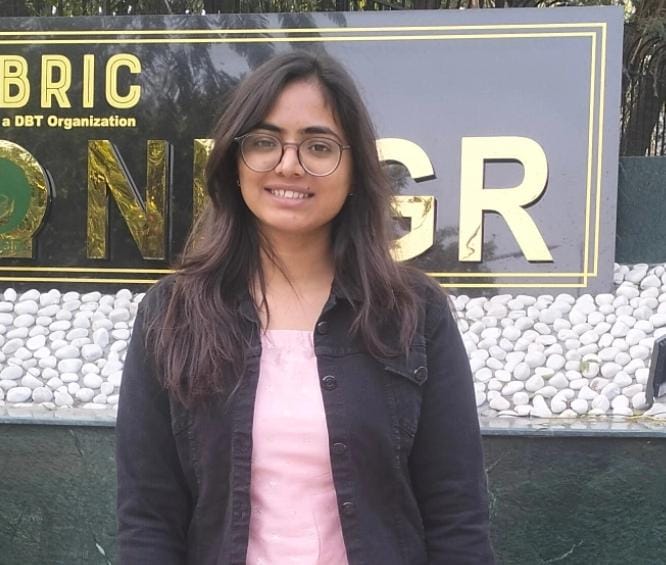
Ms. Priti Chahal
BRIC-National Institute of Plant Genome Research (BRIC-NIPGR), India
Abstract (Poster Presentation)
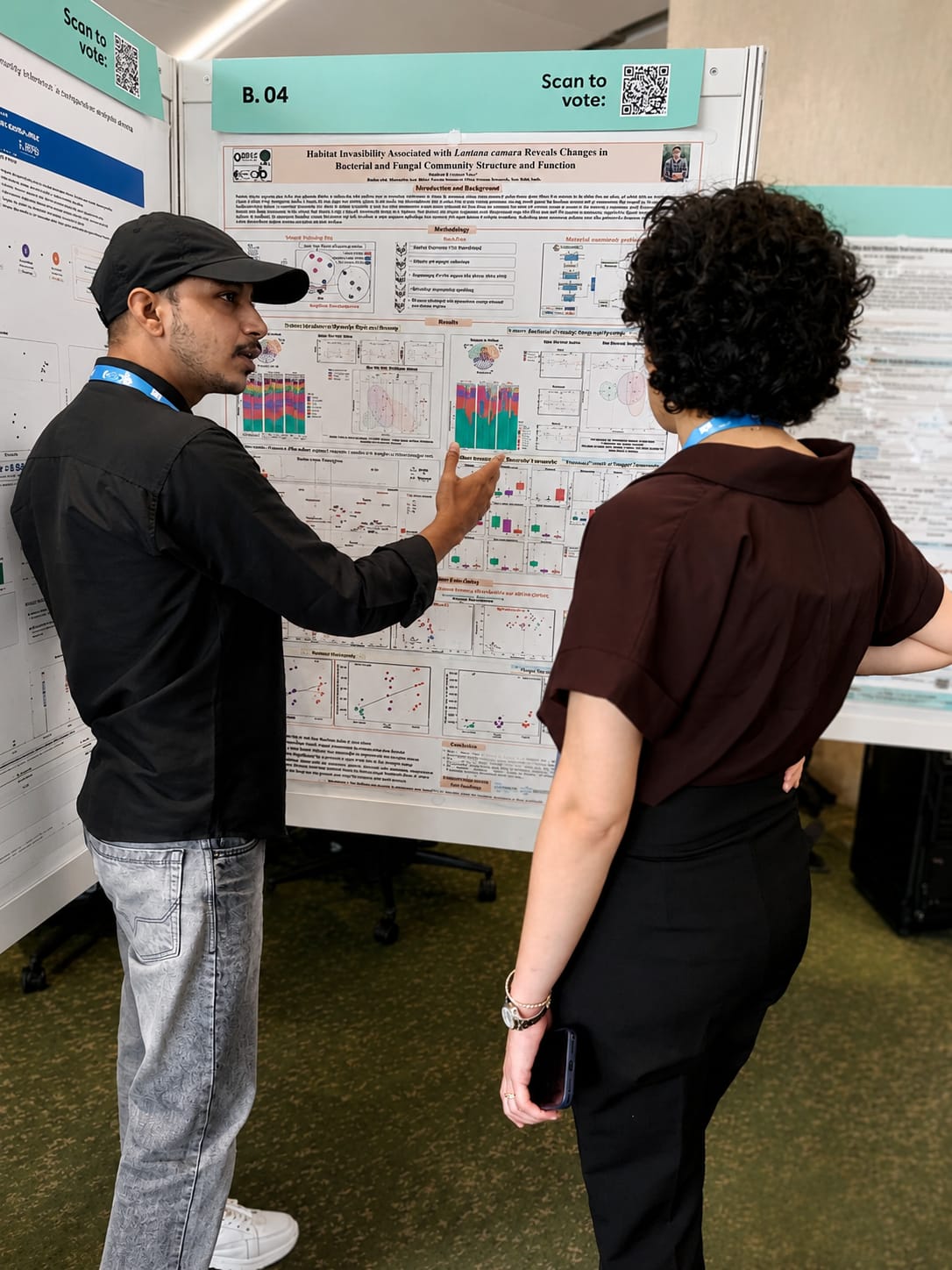
Title: Habitat Invasibility Associated with Lantana camara Reveals Change in Bacterial and Fungal Community Structure and Function
Presented by: Mr. Mandeep, BRIC-NIPGR, New Delhi, India
Soil microorganisms are integral to plant invasion processes, functioning both as agents that facilitate invasion and as communities that respond to vegetation change. Despite growing evidence of microbial involvement, the effects of habitat invasibility on soil microbial communities remain poorly understood. In this study, we examined the effects of Lantana camara invasion on the diversity, composition, and functional potential of soil bacterial and fungal communities in the Corbett Tiger Reserve, India, using the Non-invaded habitat as a reference. Compared with Non-invaded habitat, Lantana camara invasion had no significant difference on bacterial alpha-diversity and fungal alpha-diversity. In contrast, the beta-diversity of both bacterial and fungal communities differed markedly between Invaded, Partially-invaded and Non-invaded habitats. Proteobacteria and Ascomycota are the most prevalent phyla in each of the three habitats in bacterial and fungal datasets respectively. Functional prediction analyses further indicated that Lantana camara invasion enhanced the representation of bacterial functions related to carbon and nitrogen cycling, including aerobic chemoheterotrophy, chitinolysis and nitrate reduction. Litter saprotrophs and ectomycorrhizal fungal guilds are significantly high in Invaded Habitat. Collectively, these findings demonstrate that Lantana invasion profoundly reshapes soil microbial communities and their functional potential.
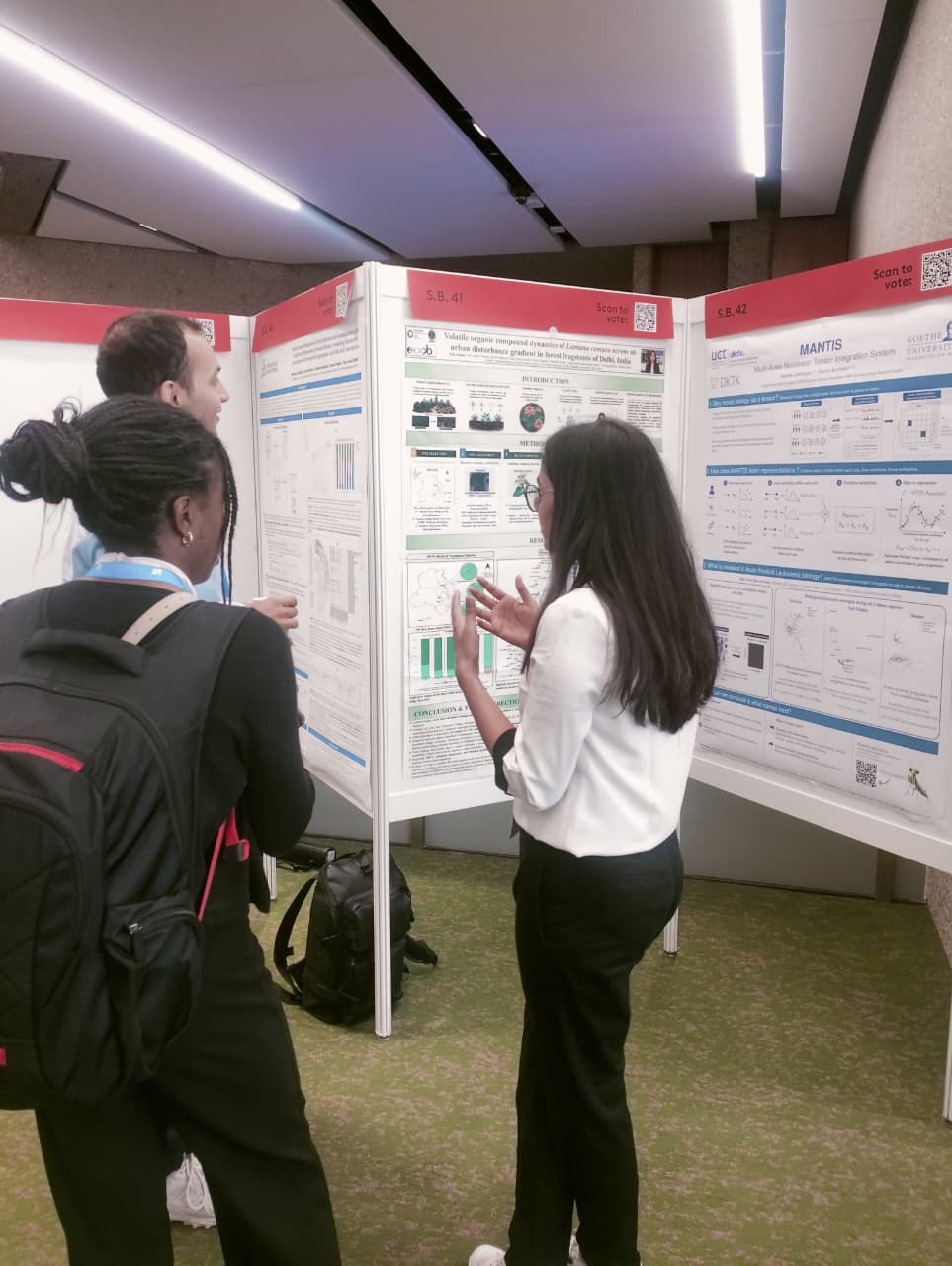
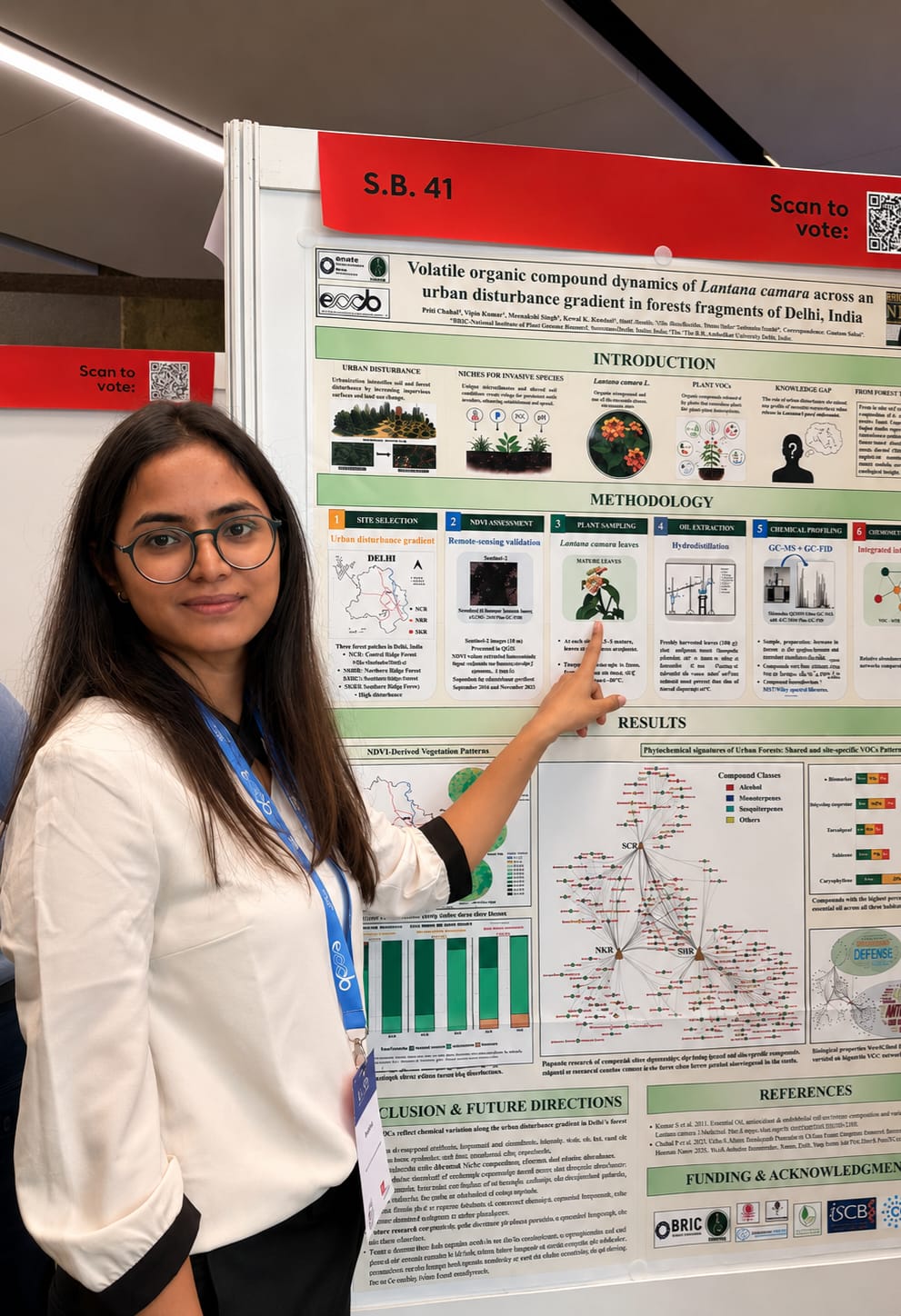
Title: Volatile organic compound dynamics of Lantana camara across an urban disturbance gradient in forest fragments of Delhi, India
Presented by: Ms. Priti, BRIC-NIPGR, New Delhi, India
Urban forest fragments worldwide experience chronic anthropogenic disturbance, habitat fragmentation, and widespread biological invasions, yet the biochemical mechanisms that enable invasive species to persist and dominate in such environments remain poorly understood. Lantana camara, one of the world’s most widespread woody invaders in tropical and subtropical forests, is known for prolific production of volatile organic compounds (VOCs) that mediate plant–plant, plant–microbe, and plant–herbivore interactions. In this work, we examine essential oil composition of L. camara across three urban forest fragments of the Delhi Ridge (India) representing a quantified disturbance gradient. Disturbance intensity was classified using decadal (2016–2025) changes in vegetation structure derived from NDVI analysis, corroborated by field-based observations.
Essential oil yield and compound richness increased with disturbance intensity, with 68, 81, and 90 compounds detected at low-, moderate-, and high-disturbance sites, respectively. Sesquiterpenes dominated all sites, and β-caryophyllene, α-humulene, and bicyclogermacrene formed a conserved chemotypic core. However, class-level shifts were evident along the gradient; monoterpene abundance (notably sabinene) declined under higher disturbance (from 10.2% to 4.0%), whereas oxygenated monoterpenes (e.g., eucalyptol) increased (from 5.1% to 8.2%). A bipartite network analysis identified 22 compounds consistently shared across sites alongside disturbance-associated unique emissions, indicating coexistence of chemotypic stability and biochemical plasticity, thereby underscoring metabolic flexibility as a hallmark of urban invasion. These findings demonstrate that L. camara maintains a conserved defensive chemical framework while modulating volatile expression in response to urban disturbance.
Program Schedule

|

|
Programme overview
Parallel sessions schedule
Event Highlights
|
|
|

|
Organizations Providing Travel Support

CODATA (Committee on Data of the International Science Council)

ISCB (International Society for Computational Biology)

semanticClimate
← Back