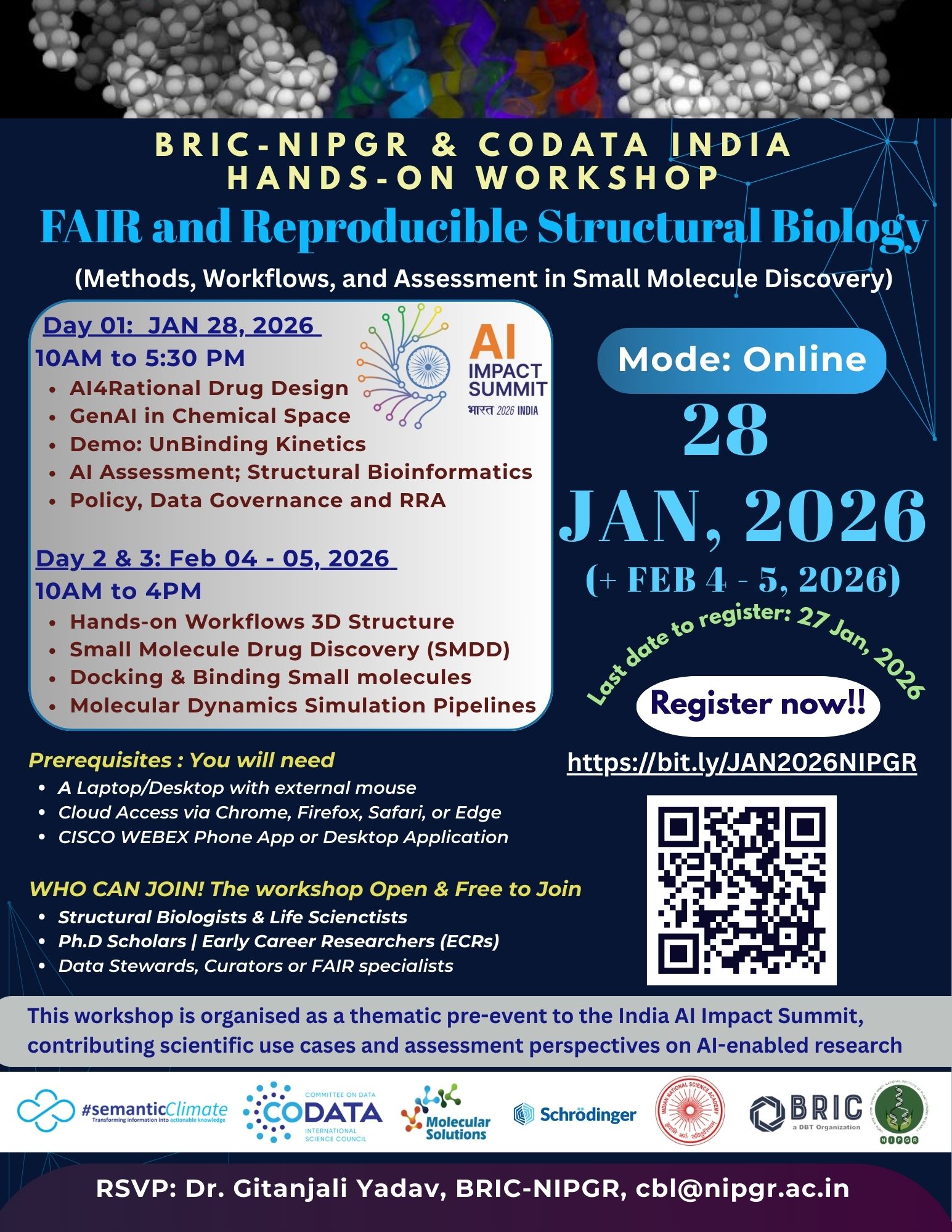
FAIR and Reproducible Structural Biology
Introduction
Advances in artificial intelligence (AI) are rapidly transforming structural biology, enabling breakthroughs in protein structure prediction, molecular docking, molecular dynamics, and large-scale simulation-driven discovery. These workflows are increasingly software-intensive, compute-heavy, and data-rich, often producing results that cannot be easily captured, shared, or evaluated using traditional publication-centric models of scientific assessment.
This workshop brings together domain scientists, data experts, and research policy practitioners to explore how AI-enabled structural biology workflows can be made reproducible, FAIR, and responsibly assessed, without requiring unrestricted data sharing or compromising intellectual property and data sovereignty. Convened in connection with the CODATA OT-ViRARe Task Group, the workshop will treat structural biology as a real-world test case for emerging frameworks in data visitation, semantic metadata, AI governance, and research assessment reform.
Objectives
The workshop aims to:
-
Examine AI-driven structural biology workflows (protein 3D analysis, docking, molecular dynamics) from the perspectives of reproducibility, provenance, and explainability
-
Explore how FAIR and AI-ready metadata can describe complex simulation pipelines, models, and parameters
-
Discuss how such software-mediated research outputs should be responsibly assessed beyond journal publications
-
Demonstrate hands-on use cases illustrating secure, controlled, and visitation-based analysis
-
Generate insights that will inform the Open Research Assessment Toolkit (ORAT) under the OT-ViRARe Task Group
|
Format
Full-day, online workshop combining:
-
Lead talks (scientific + policy perspectives)
-
Live demonstrations and guided hands-on sessions
-
Small-group discussions on assessment and governance
-
A closing reflection session linking domain practice to global research assessment reform
Programme
DAY 01 : JANUARY 28, 2026
- Session 1: AI in Structural Biology – State of the Art
- Session 2: Introduction to Small Molecule Drug Discovery (SMDD) Suite, Demo on Ligand Binding
- Session 3: Reproducibility, Provenance, and Explainability in AI-driven Science
- Session 4: How Do We Assess This Work? Beyond Publications and Impact Factors
- Session 5: Reflections for Policy, Data Governance, and ORAT Development
DAY 02 and DAY 03 : FEBRUARY 04-05, 2026
- Hands-on Workflows on Protein Ligand Docking, MD
- Structural Simulation Pipelines
Expected Outcomes
-
A shared understanding of challenges in assessing AI-driven structural biology
-
Practical inputs into semantic and visitation-enabled assessment models
-
Case-study material for OT-ViRARe deliverables
Registration Link
Click Here to Register
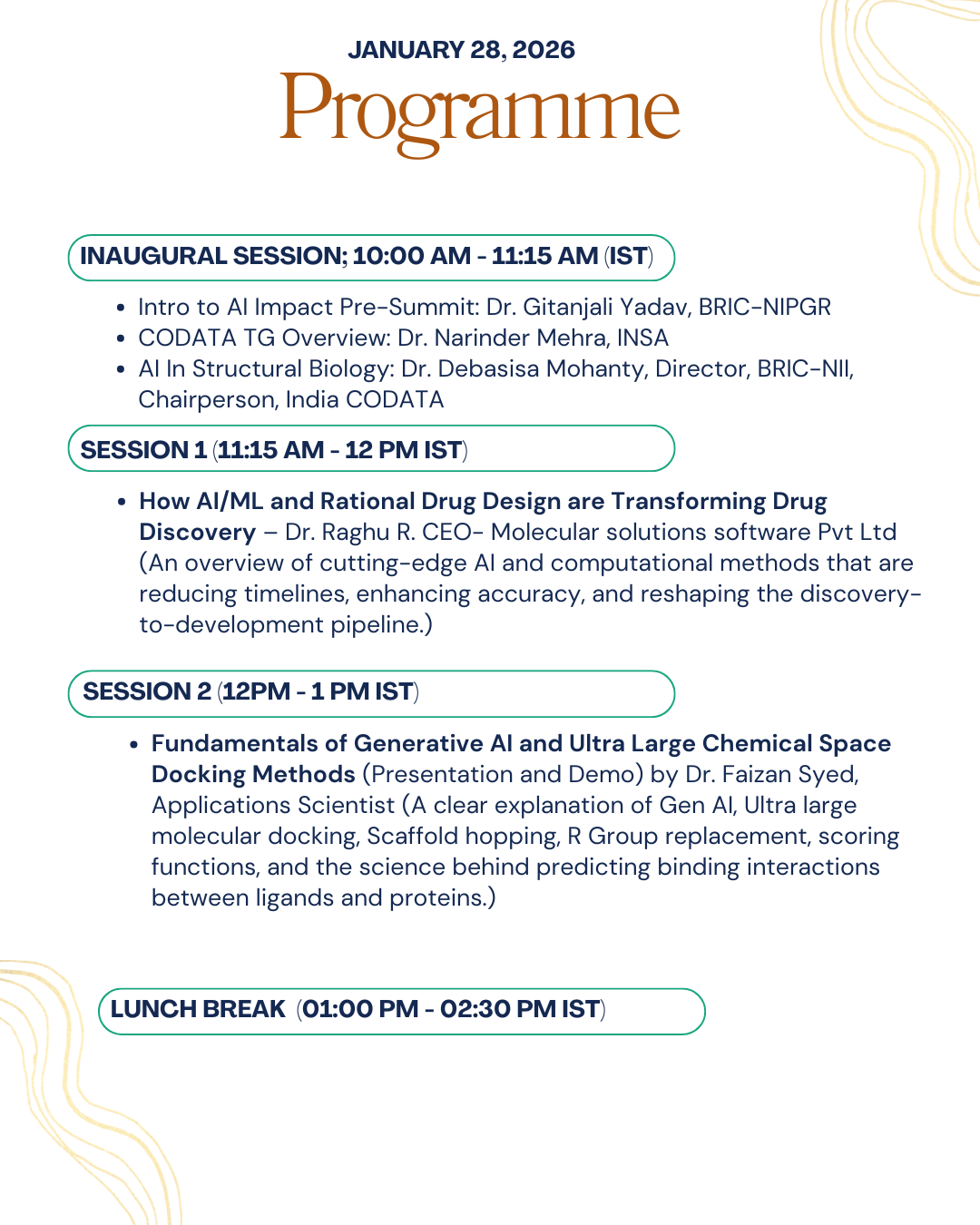
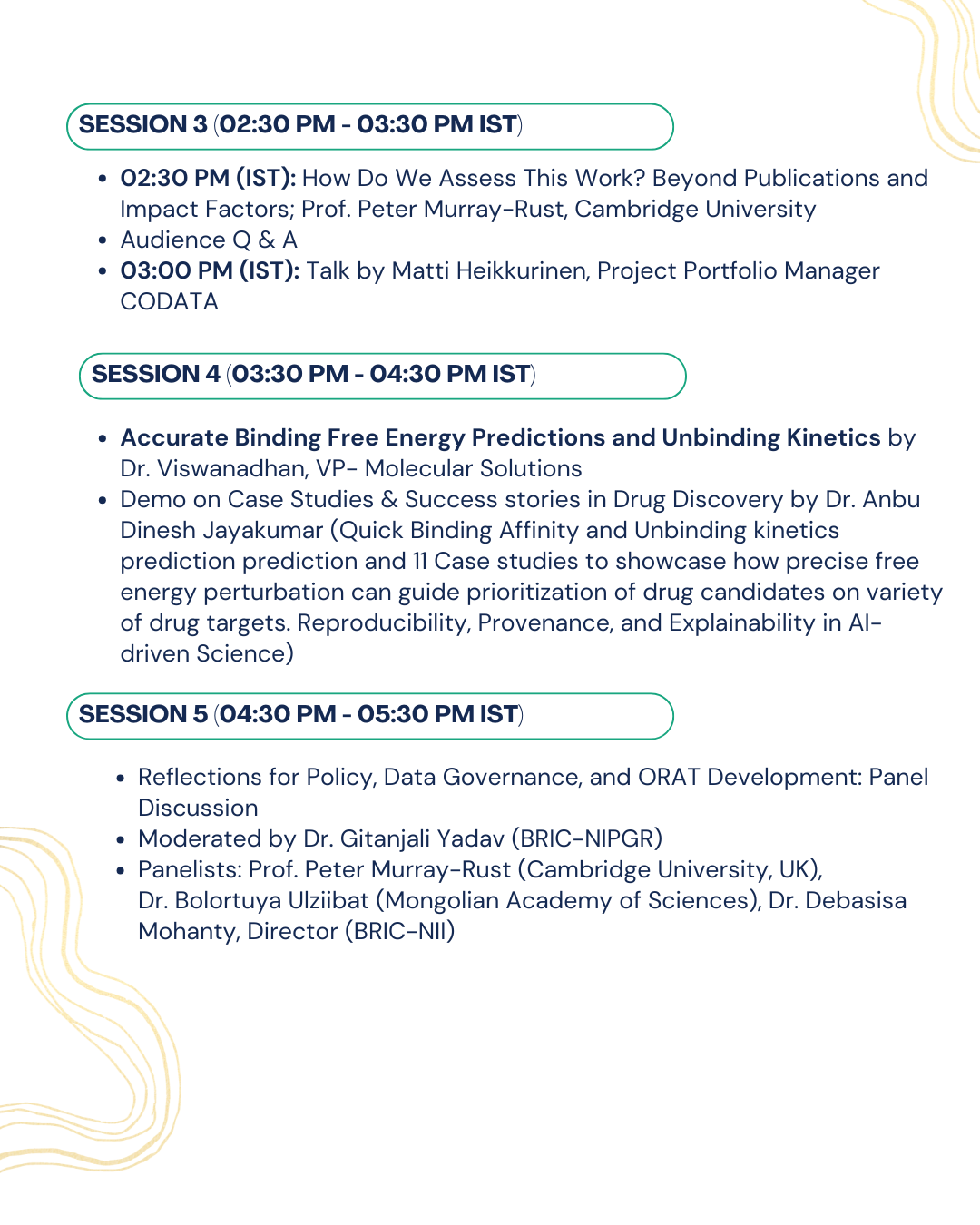
Full Programme : January 28, 2026
|
|
Event Report
Click Here
Event Pictures | Click here to see
Recordings of the different session from Day 1 (Jan 28, 2026)
Click Here
← Back