Event Participation
Dr. Adrianna Baravalle
-
Director of the Exponential Technologies Laboratory at the University of Austral in Argentina.
-
Co-Chair of the OT-ViRARe project.
List of Events
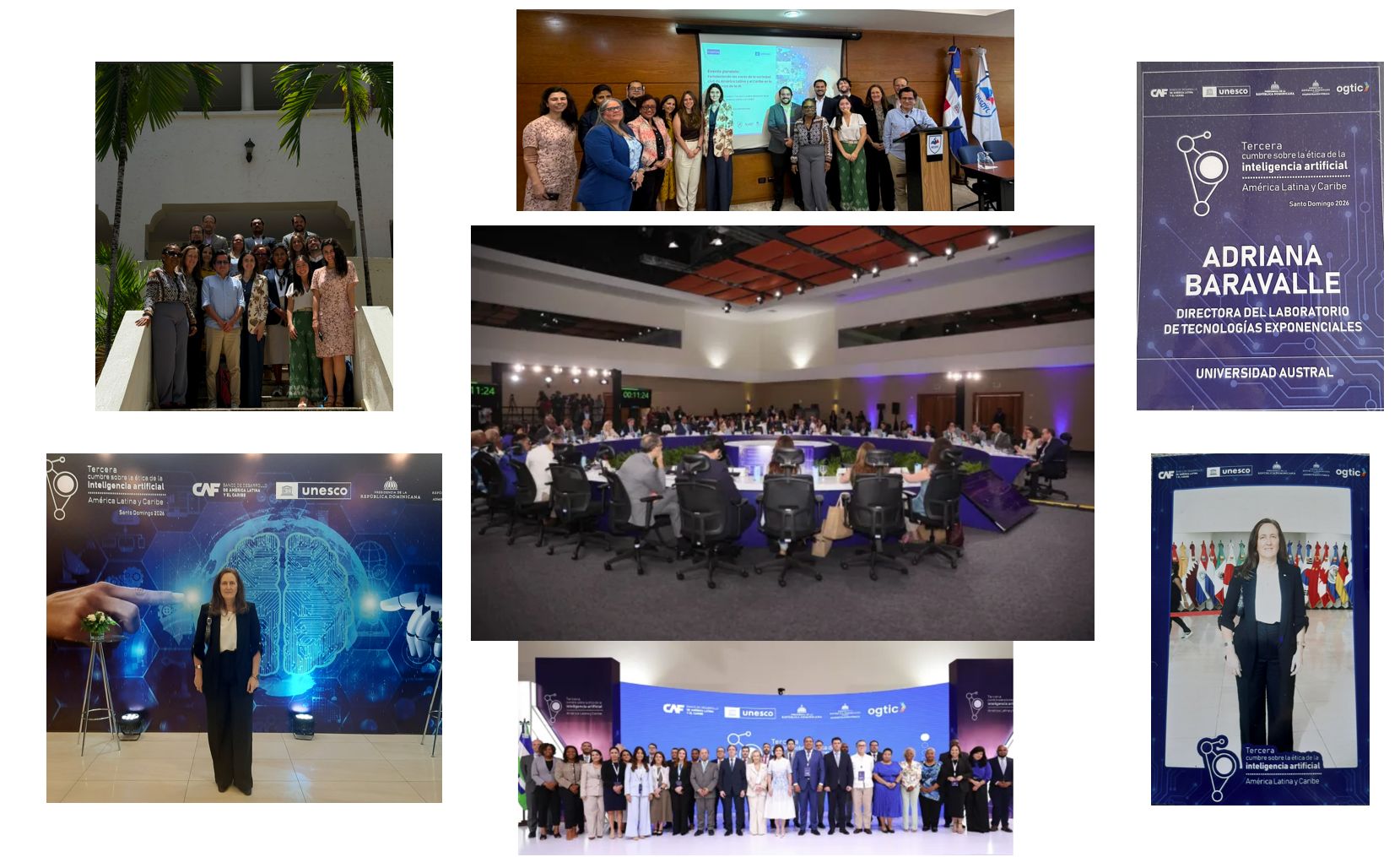
June 24, 2026
She served as an expert at the side event "Strengthening the voices of civil society and academia in LAC regarding AI governance," co-organized by Globethics and UNESCO in Santo Domingo during the Third Ministerial Summit on the Ethics of AI. There, she took part in a panel discussion and the endorsement of the regional position paper "Fair, Sovereign, and Inclusive AI Governance," in preparation for the UN Global Dialogue in Geneva this July.
|
June 25-26, 2026
She participated in the Third Ministerial and High-Level Authorities Summit on the Ethics of AI in LAC, co-organized by UNESCO, CAF, and OGTIC. This agenda is framed by UNESCO’s Recommendation on the Ethics of AI (2021) and its Readiness Assessment Methodology (RAM), which has been implemented in over 75 countries.
Key points that emerged from both forums:
- Recognizing AI as public infrastructure and promoting digital public goods.
- Reducing structural gaps: connectivity, computing infrastructure, talent, and funding continue to shape the region's global standing.
- Promote technological sovereignty through South-South cooperation and greater LAC representation in ISO, ITU, IEEE, and other standardization bodies.
- Establishing clear red lines: banning lethal autonomous weapons, mass biometric surveillance, social scoring, and predictive profiling.
- Protecting the most vulnerable populations (children, women, Indigenous peoples, and Afro-descendant communities) through stronger standards and redress mechanisms.
- Anchor governance in international human rights law
- Prioritize environmental sustainability
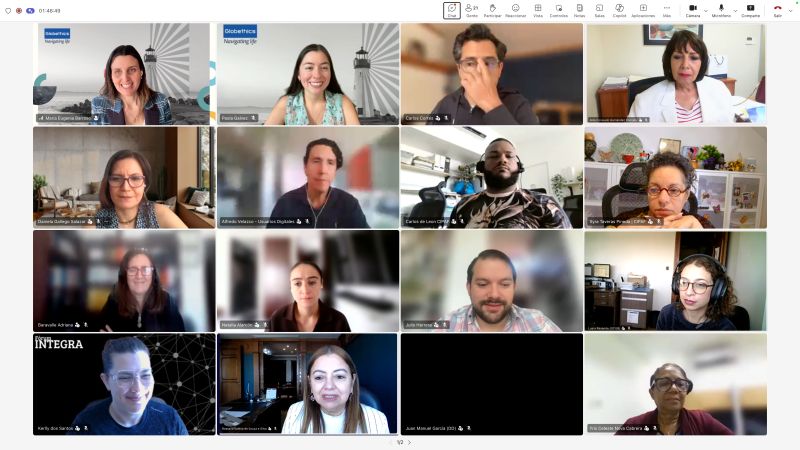
Third Ministerial Summit
"On the Ethics of Artificial Intelligence in Latin America and the Caribbean, co-organized by Globethics and UNESCO, with the support of OGTIC."
|
Key messages:
- The urgent need for strong and binding regulatory frameworks
- The importance of technological and data sovereignty
- The protection of cultural and linguistic diversity
- The central role of civil society and academia in decision-making
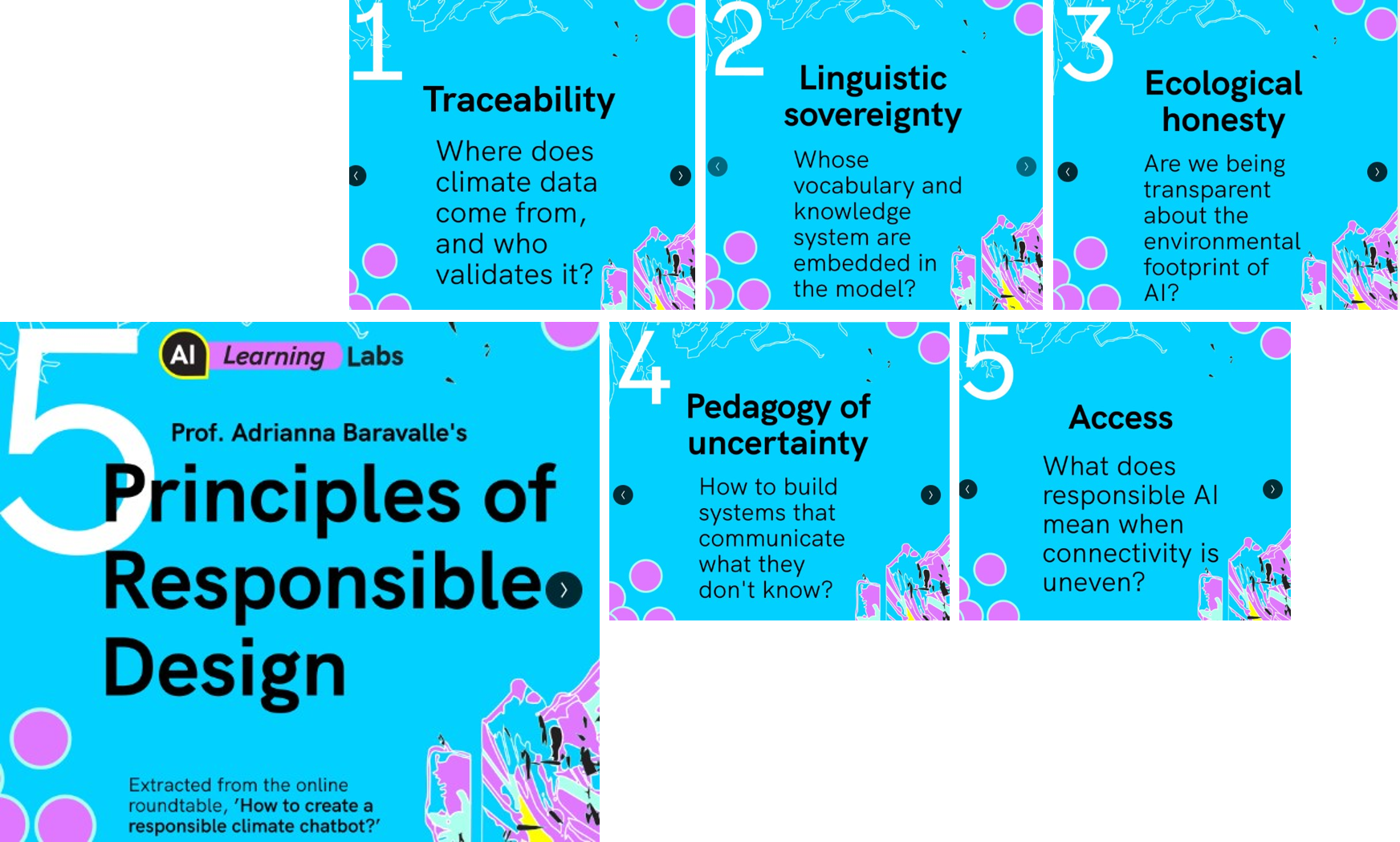
AILearningLabs session:
Prof. Adriana Baravalle (Universidad Austral, Buenos Aires) presented a framework for assessing how ‘responsible’ the design of an AI application is, with a view to building a climate chatbot.
|
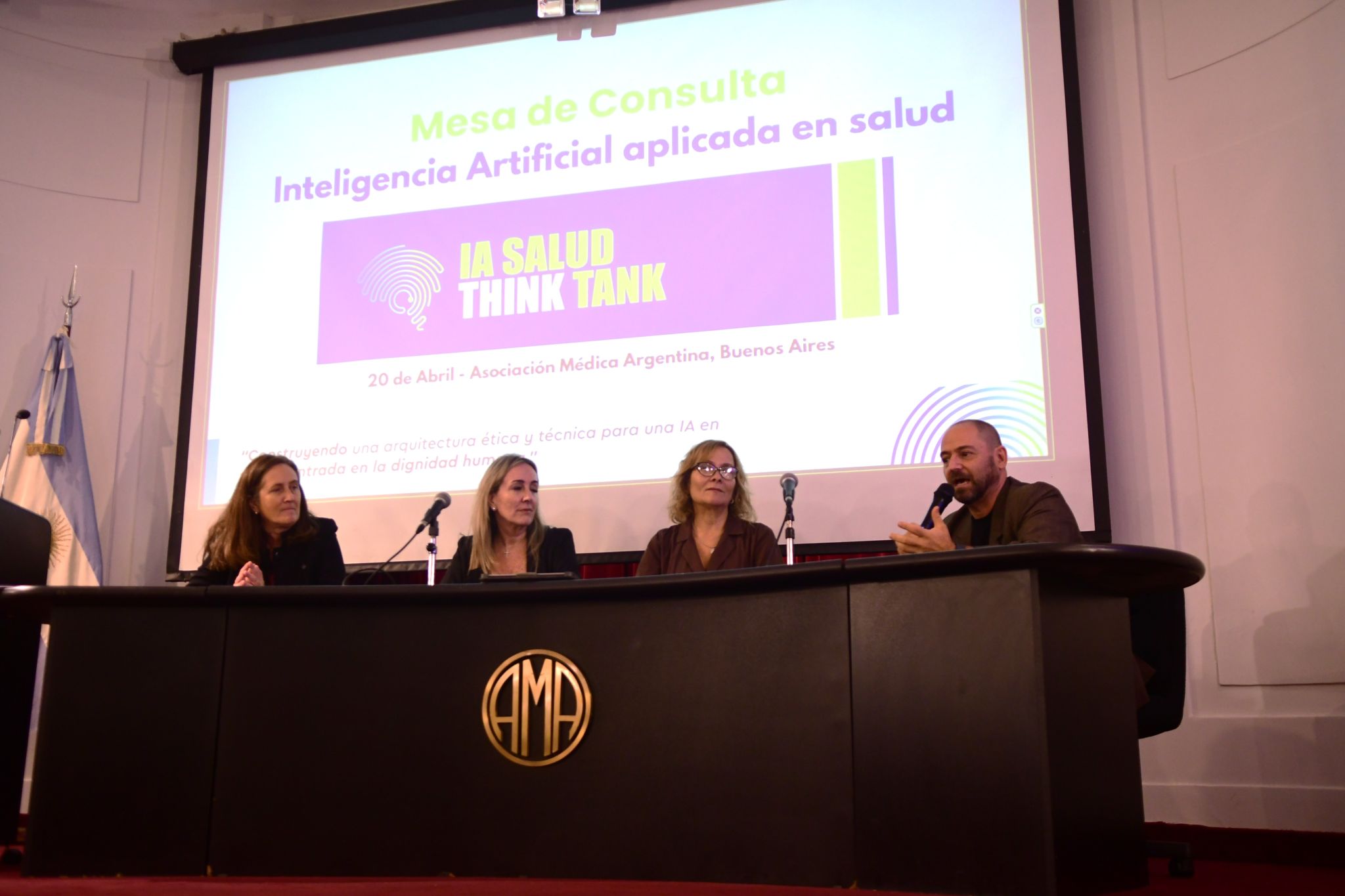
First face-to-face meeting of the Artificial Intelligence in Health Think Tank
On Monday, April 20, the first face-to-face meeting of the Artificial Intelligence in Health Think Tank took place at the headquarters of the Asociación Médica Argentina (AMA). The meeting brought together representatives from academia, clinical practice, technology, and regulatory institutions with a shared goal: to build an ethical and technical architecture for the implementation of AI in the Argentine health system.
|
|
The event was opened by Dr. Miguel Galmés, President of WADA, and Alexander Dizend, President of the SAIA (Sociedad Argentina de Inteligencia Artificial).
Among the central topics of the debate:
✅ Legal certainty for the medical act
✅ Health Data Governance and Sovereignty
✅ Own interoperability standards for the Latin American context
✅ Reducing bias in models trained in contexts other than our own
✅ FAIR principles as a State policy
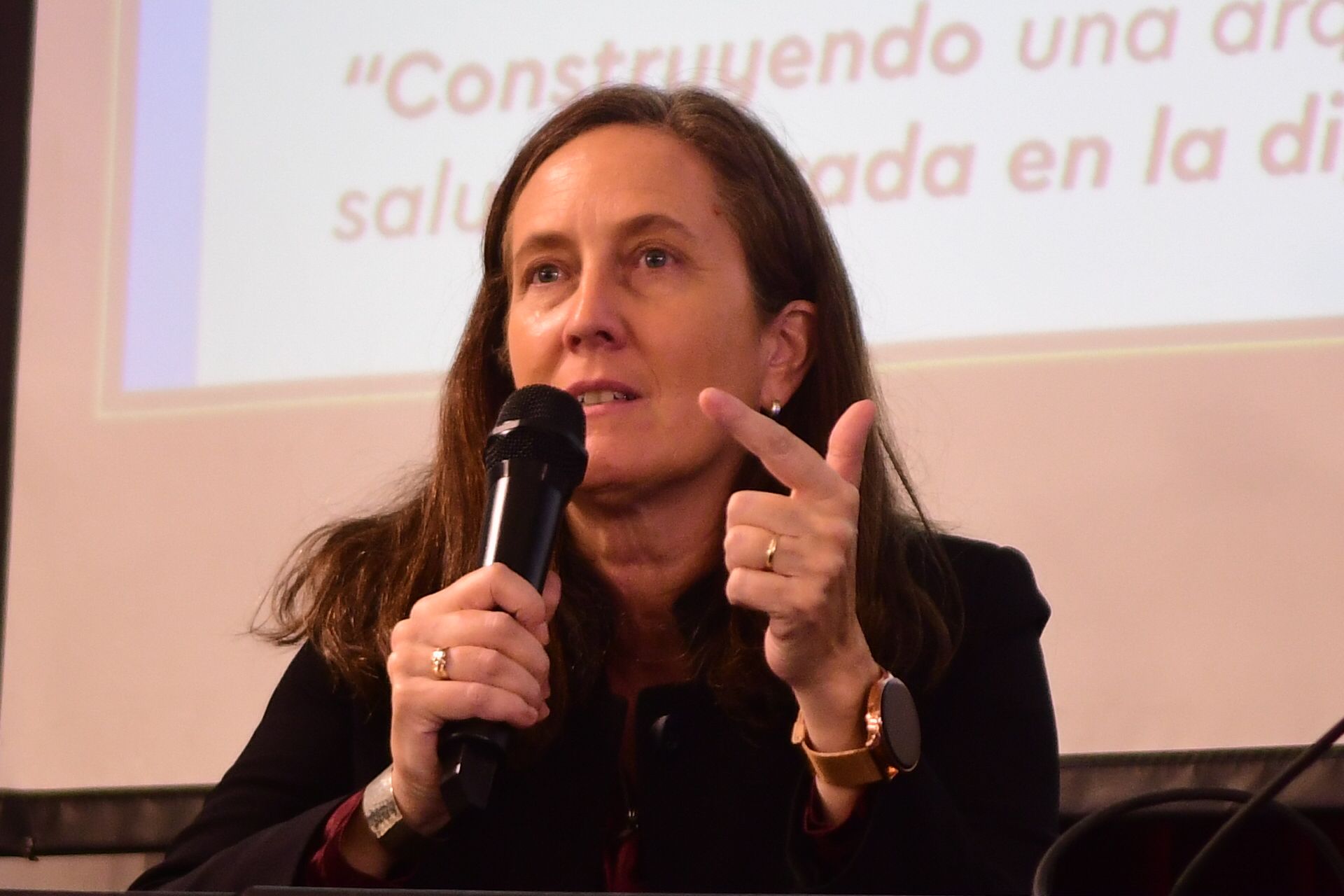
"AI is not coming to replace but to increase our capabilities. Soon, another challenge will come, which is quantum computing. If this goes quickly, get ready because what is coming is overwhelming," said Adriana Baravalle, Director of the Exponential Technologies Laboratory of the Austral University.
AI in health: the challenge of building consensus with an ethical approach
As part of a meeting organized by the Asociación Médica Argentina (AMA) and SAIA (Sociedad Argentina de Inteligencia Artificial), leaders from the healthcare, academic, and technology sectors came together to discuss how to advance artificial intelligence in health focused on human dignity.
|
During the day, a Think Tank IA En Salud was formed with specialists such as Judit Marisa Díaz Bazán, Adriana Baravalle, Martin Romero, Maria Isabel Iñigo Petralanda, Fabio Budris Klaz, Mg. Jenny González ., Miguel Galmés, Alexander Ditzend and Alexis Descourvières (ALAPA - Alianza Argentina de Pacientes );
They emphasized the need to establish ethical and technical frameworks that ensure transparency, equity, data protection, and appropriate clinical oversight in the implementation of AI tools.
The discussion also highlighted the importance of generating agreements and guidelines that allow AI to be integrated into the health system without deepening inequalities from the technological and institutional levels.
The Industrial Cyber Summit Argentina 2026
The benchmark conference on industrial cybersecurity in the region.
Adriana Baravalle (Universidad Austral/UNDEF): The quantum threat is getting shorter. What was expected for 2030 is already coming sooner. The key: to work as a team from academia, government and companies, now.

|
SAIA (Sociedad Argentina de Inteligencia Artificial)
Can technology democratize access to health?
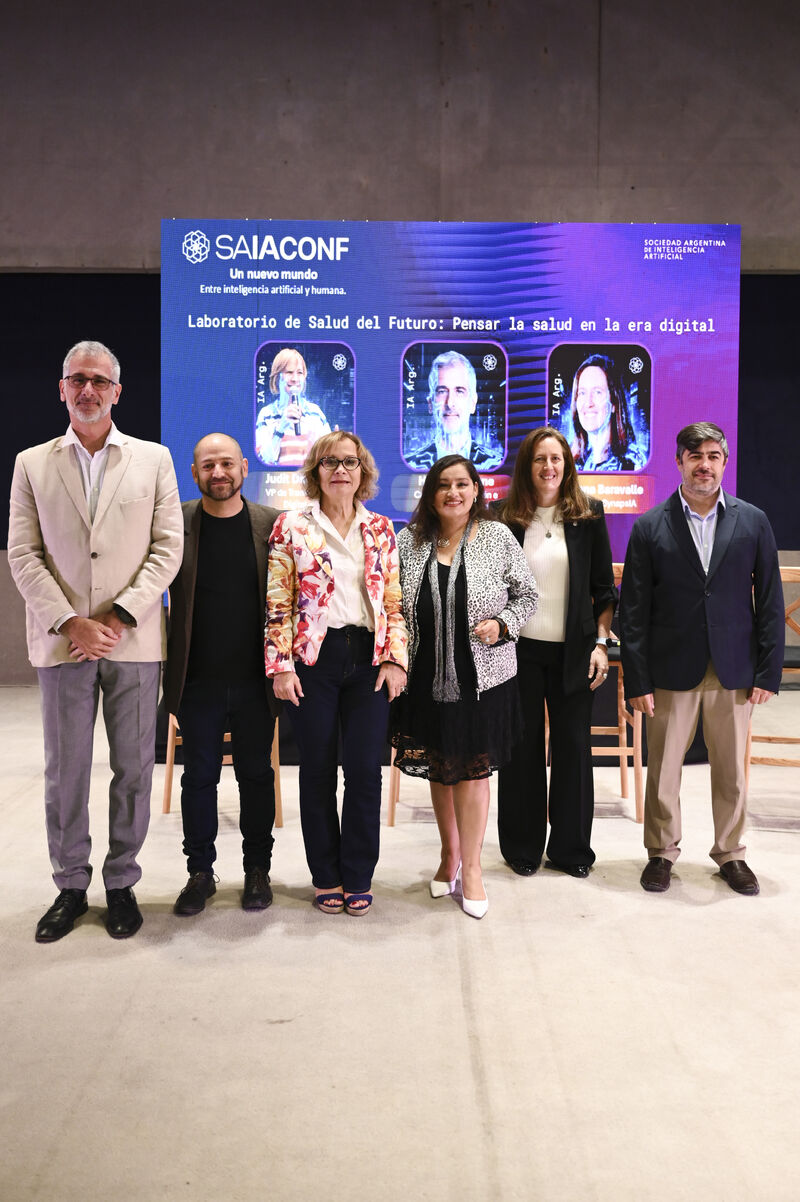
In the conference, Judit Marisa Díaz Bazán (AMA), Hernan Seoane and Adriana Baravalle (SynapsIA) got into one of the most urgent conversations in healthcare today: what happens when artificial intelligence and digital data start to redefine how we take care of ourselves.
The full talk is available here
|
← Back